
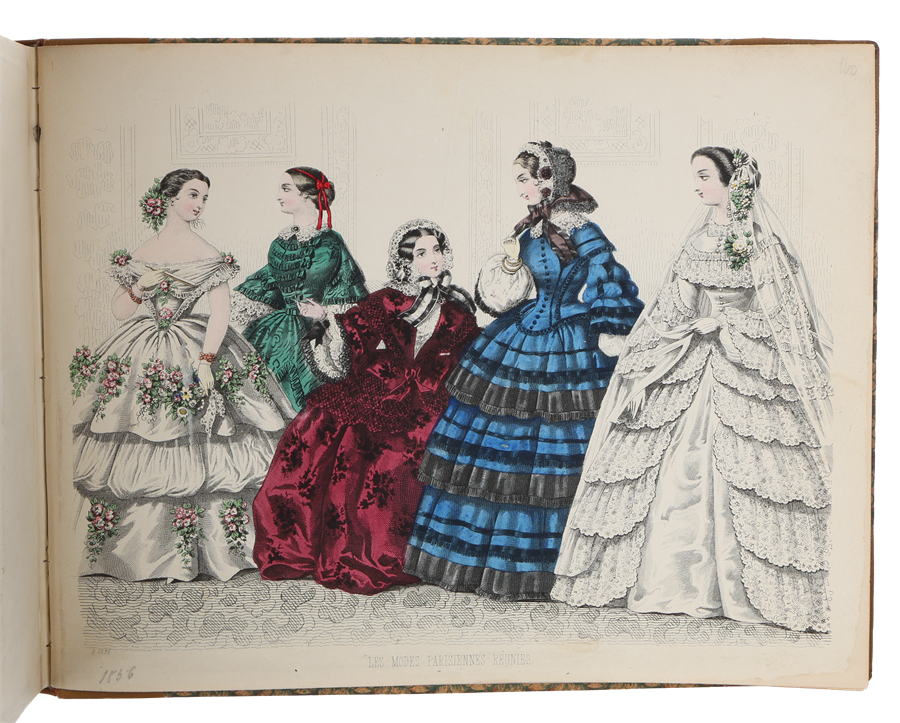
![[Aus: Allgemeine Moden-Zeitung & Les Modes Parisiennes Réunis]. Collection of 100 engraved and coloured fashion-plates.](/images/fancy/62953c.png)
![[Aus: Allgemeine Moden-Zeitung & Les Modes Parisiennes Réunis]. Collection of 100 engraved and coloured fashion-plates.](/images/fancy/62953d.png)
![[Aus: Allgemeine Moden-Zeitung & Les Modes Parisiennes Réunis]. Collection of 100 engraved and coloured fashion-plates.](/images/fancy/62953e.png)
![[Aus: Allgemeine Moden-Zeitung & Les Modes Parisiennes Réunis]. Collection of 100 engraved and coloured fashion-plates.](/images/fancy/62953f.png)
![[Aus: Allgemeine Moden-Zeitung & Les Modes Parisiennes Réunis]. Collection of 100 engraved and coloured fashion-plates.](/images/fancy/62953g.png)
![[Aus: Allgemeine Moden-Zeitung & Les Modes Parisiennes Réunis]. Collection of 100 engraved and coloured fashion-plates.](/images/fancy/62953h.png)
![[Aus: Allgemeine Moden-Zeitung & Les Modes Parisiennes Réunis]. Collection of 100 engraved and coloured fashion-plates.](/images/fancy/62953i.png)
![[Aus: Allgemeine Moden-Zeitung & Les Modes Parisiennes Réunis]. Collection of 100 engraved and coloured fashion-plates.](/images/fancy/62953j.png)
![[Aus: Allgemeine Moden-Zeitung & Les Modes Parisiennes Réunis]. Collection of 100 engraved and coloured fashion-plates.](/images/fancy/62953a.png)
![[Aus: Allgemeine Moden-Zeitung & Les Modes Parisiennes Réunis]. Collection of 100 engraved and coloured fashion-plates.](/images/fancy/62953b.png)
[Leipzig, Industrie-Comptoir / Baumgärtner etc.], (1833-1856).
Small queer-folio (22 x 28,5) cm. Nice later light brown half calf from ca. 1900 with five raised bands and gilt lines to spine (Carl Petersens Enke). Slight wear to extremities. 100 engraved plates, in contemporary colouring. A bit of even browning and occasional offsetting. A few plates with more browning. Some plates with tiny holes in blank margin, from original stiching (having been vertically bound with text-leaves). Occasional light creasing. One plate with a tear (no loss). A few plates signed A. Brückner, most plates numbered and dated, and some plates having "Extra-Kupfer" or "Les Modes Parisiennes Réunis" (the last five) underneath.
A lovely collection of 100 beautiful contemporarily coloured engraved fashion-plates from between 1833 and 1856, importing the highest Parisian fashion of the time to Germany. This beautiful collection magnificently documents the clothing fashion and development of two decades, primarily for women, but also for children and men. Also in the mid-19th-century, Paris was seen as the quintessence of elegance and style. The Allgemeine Moden-Zeitung kept the German-speaking public up to date with the latest fashions from Paris. The magazine “Les modes parisiennes reunites” did the same; that too was produced for the German public, despite its French title. As well as outfits for appearing in high society, eg. at the theatre, the fashion plates collected here show clothes and notably also accessories for almost all other parts of life - paying and receiving social calls, going for walks, attending different events, musical siorées, going out with the children, etc. “As part of her evening wardrobe, every fashionable lady simply had to have elegant dresses in brightly coloured silks and satins, with frills and lace, bows and flounces, tight bodices, natural waistlines and exposed shoulders, which gave the female figure an hour-glass silhouette. The first thing that strikes one about these ladies’ fashions are the stiff, voluminous underskirts. Horsehair crinolines (invented in 1850) supported wide, sweeping skirts, which could measure up to two or two-and-a-half metres in diameter and made the upper body look even slimmer.” (Deutsches Historisches Museum). "From the 1820s onwards, and particularly under the ostentatious Second Empire (1852–1870), the classicising taste of the Napoleonic era changed completely. Instead, fashion now drew inspiration from the elegance of the Rococo period, so much so that the period became known as the “second Rococo”. The waistline returned to its natural level but was awkwardly styled – at least from a health point of view: agonisingly tight corsets emphasised the so-called “wasp waist”. Ostensibly guided by aesthetics, on closer inspection this fashion trend also had social consequences: with styles that afforded women so little freedom of movement, fashion focused on the ostentatious requirements of ladies from the upper echelons of society, who didn’t have to work. Practicality was not its concern. This ostentatious and – certainly from the perspective of the 21st century – inconvenient fashion style appealed not only to the fine ladies of high society, but also to women from the middle classes and the petty bourgeoisie. The expansion of the textile industry and the rise of the chemical industry made the production of dyes, fabrics, lace, and embroidery and the processing of raw materials and textiles imported from the colonies both quicker and cheaper.” (DHM)
Order-nr.: 62953