
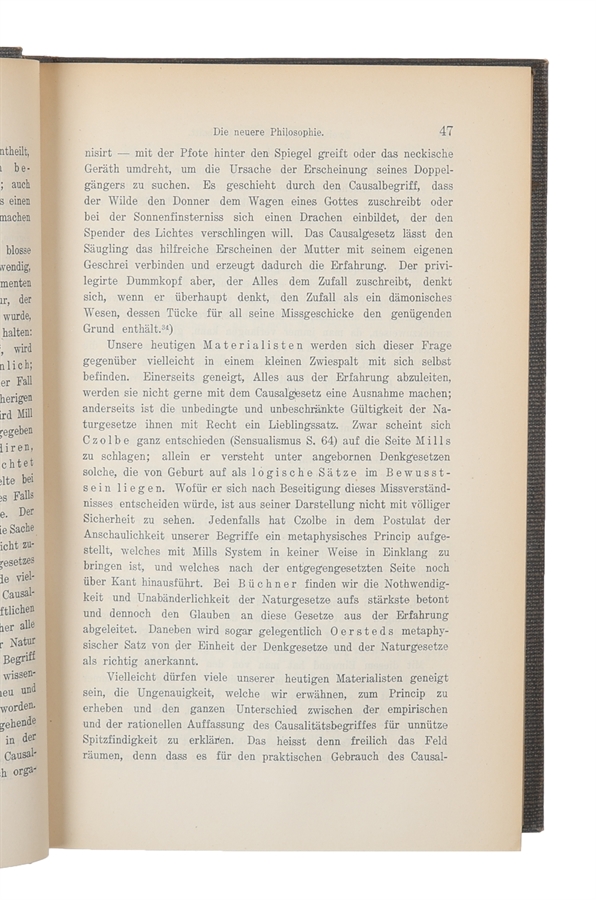
Leipzig, 1908.
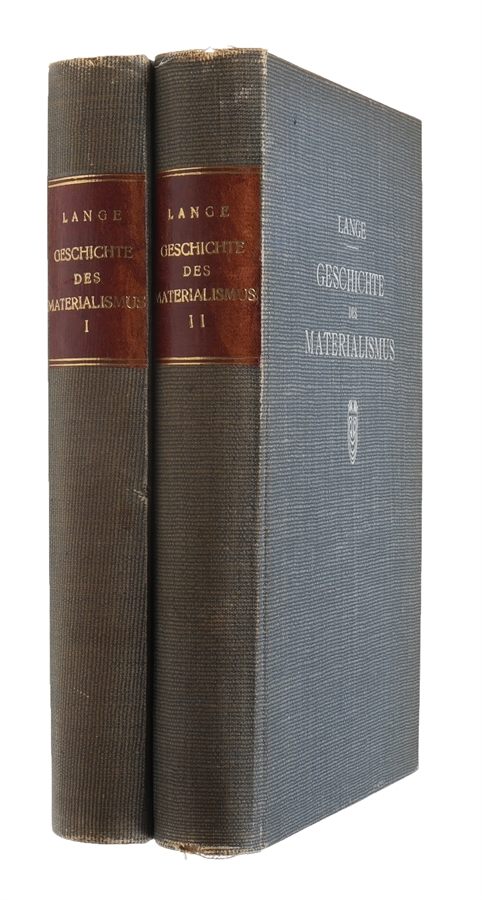
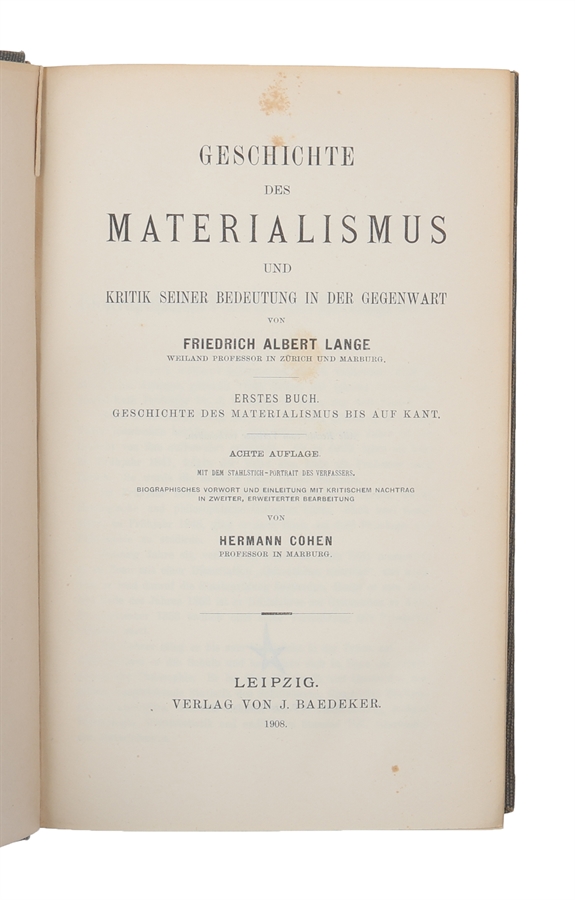
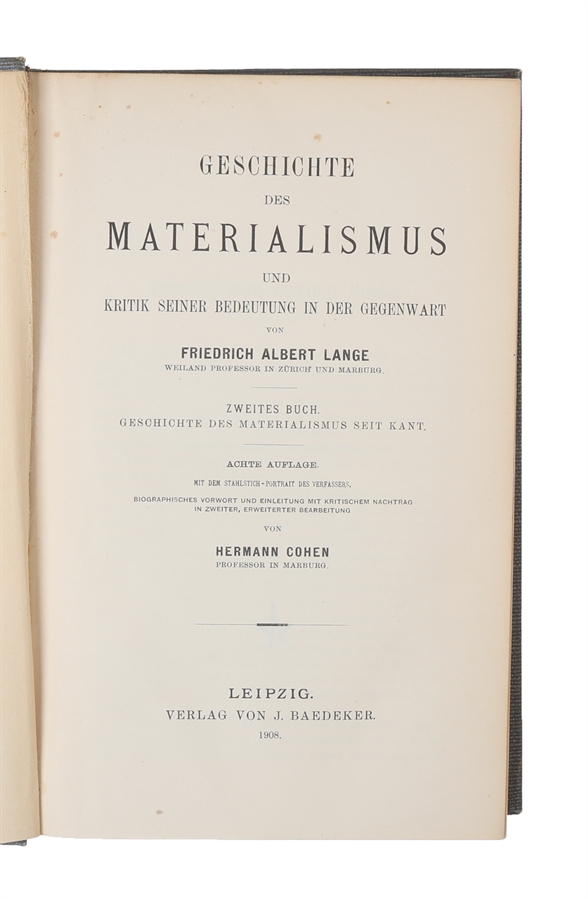
8vo. Two volumes, both in publisher's original full cloth binding. Bindings with light wear. Ex-libris to verso of front boards. Hinges a bit weak. Internally fine and clean. XXIII, 535 pp.; XIII, 573, (3) pp.
Eighth edition of Lange's seminal work on materialism which had profound influence on Nietzsche who stated that it "without a doubt [was] the most significant philosophical work to have appeared in the last hundred years" (Letter to Muschacke). "Nietzsche never 'broke' with Lange's thought at any point in his career as he did with other influences" (Constancio, Nietzsche and the Problem of Subjectivity).
"Lange's most famous book, The History of Materialism and Critique of its Contemporary Significance, is in essence a defense of such a return to Kant. It is also a detailed history of materialism (and was read well into the twentieth century for precisely this reason). However, more fundamentally, it was meant to drive home the above mentioned concerns about materialism. Lange accepted materialism as a sensible maxim for the construction of theories within natural science. However, as a comprehensive philosophical system, as both fundamental ontology and epistemology, materialism is self-undermining." (Stanford)
In 'Geschichte des Materialismus' Lange adopted the Kantian standpoint that we can know nothing but phenomena, Lange maintains that neither materialism nor any other metaphysical system has a valid claim to ultimate truth. For empirical phenomenal knowledge, however, which is all that humans can look for, materialism with its exact scientific methods has done most valuable service. Ideal metaphysics, though they fail of the inner truth of things, have a value as the embodiment of high aspirations, in the same way as poetry and religion. Lange replaced the transcendental subject of Kantianism by the organism, although he considered that this substitution validated all the more Kant's philosophy that
Order-nr.: 63544